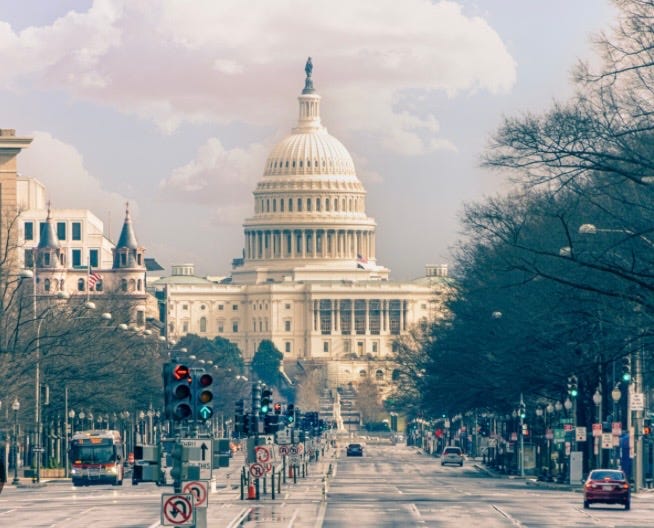
Washington DC is the first city I can remember visiting. I recall a long road called Pennsylvania Avenue, it ran East-West following the arc of the summer sun, known the world over as “the heart of the Nation’s Capital.” It was asphalted, tree lined, very straight and very wide, as a pseudo-divine highway between The White House and The Capitol Building.
It was lined on both sides with long rows of buildings, as long and wide as the avenue itself. The massive facades felt imposing, impenetrable, and they were only broken up by the intersecting side streets. These streets didn’t only form the buildings into neighboring blocks, but were almost as bridges between separate towns. These blocks became a measurement system which calculated the distance from the hotel we were staying in, which served as a safe harbor, and the urban landscape surrounding it.
I began to recognize a familiar restaurant on one corner and a museum on the next corner. I could smell the exhaust and hear the sound of rushing traffic. I could feel the humid air of the city between gusts of air-conditioning coming from the open doors of store fronts and office buildings. Every summer morning when my family stepped outside the cool gusts of our hotel lobby and onto the hot avenue, we had to choose one of four roads to walk down. We could choose to turn left or right, and then we had to choose on which side of the street we wanted to walk on.
Then thirty years passed by. I had since lived in other cities. I had also visited many other important world capitals. Suddenly I was back to visit our nation’s capitol with my own family, when we suddenly turned a corner and I saw a particular part of Pennsylvania Avenue stretch out before us. We had walked down many other streets during our visit, but this street corner on Pennsylvania Avenue spoke directly to me. I breathed in the humid air and I was suddenly transported back to my childhood.
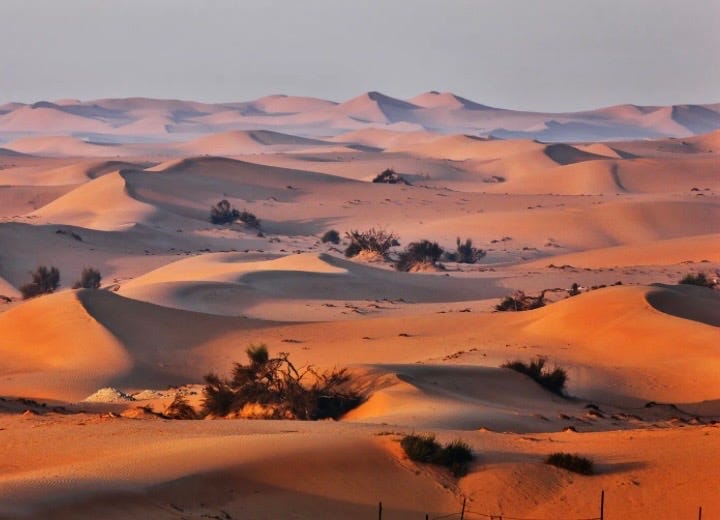
Many people have had similar experiences of being transported to another time when they suddenly turn a corner inside a familiar city. My mother often says that every one of us has a little piece of green earth that’s more important than any other piece of green earth, or a sand-dune that’s more important than any other sand-dune.
It’s speaks to Man as a microcosm of creation, when a little piece of earth can become an eternal landmark within his inner geography. But it also speaks to the nature of a city when an urban focal point can become something of a spiritual address, which we can remember and revisit in our hearts.
While many people long for a sandy beach or an alpine meadow, other people seek this soulful communication inside a city, which can be equally natural. Urban culture is not unnatural at all, as is evident by the fact that a city often satisfies our human needs and desires.
Whenever I find myself exploring a new city, I sometimes feel as if I’m an urban pioneer, walking through the wilderness, searching for a route to a desired trail. I’m looking for traces of activity by inspecting the earth beneath my feet. After many years spent in cities I’ve learned how to be in communication with the vital expressions of urban life.
The first city which taught me these lessons of civilization was the finest and oldest of all cities: Rome.
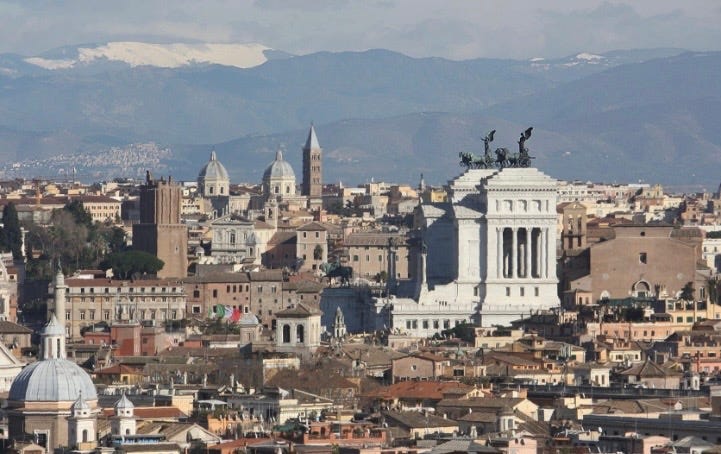
During long walks from the Via Appia Antica, through the Baths of Caracalla, all the way to St.Peter’s Square and the Gianiculum Hill, I would notice how the city would change character. I would stroll down over an ancient road which stretched like a spine through the landscape, towards medieval alleyways which opened out into a corporeal map across the city. I was peering into churches, gazing over gardens, curiously looking through lit-up windows into houses, buildings and apartments along the way.
I could see through these intimate openings men and women at work, family’s having dinner together or enjoying a televised soccer game, yet these windows were first and foremost eyes which pointed outward into the world around me. These urban eyes looked different if I was walking around the illuminated villas of the Aventine Hill or if I was walking around the tight-lit streets of the Monti- neighborhood. Every building told its own story of the parameters of life inside the city. Whether it told the story of a Carabinieri police officer, of a neighborhood nurse, of a Roman home life, of City Hall on the Capitoline Hill or the ecosystem of a local restaurant, the city presented itself in archetypes of good and evil, of temptations and warnings.
It was evident in their urban faces, that is, in their facades, that I could read about the life which these structures protected and enabled. The city streets reflected, as in an impressionist painting, what was happening behind the walls of its buildings. Naturally enough the voices and expressions of the people around me added to the clues of how to decipher this architectural world.
The upright, casual, pizza establishments resembled its customers. Although the pizza menu in these small street-food shops tended to be the same all over the city, each pizzeria al taglio was a reflection of its own neighborhood, a mirror of how private and public life weaves itself effortlessly into a social tapestry.
Already in my early childhood the long tradition of cartoon animation, from puppet shows to Walt Disney, had introduced me to the notion that manmade creations could be animated with moving and breathing life, that even buildings could have a soul! This type of imagination was based in the truth that mankind belongs within his own architecture and gardens and not inside a wild, untamed, nature. This is also why cities are known as having a life beyond our own, which is to say that a city is more than the sum of its own parts. All this resulted in a notion that there was a measure of existence beyond my own understanding.
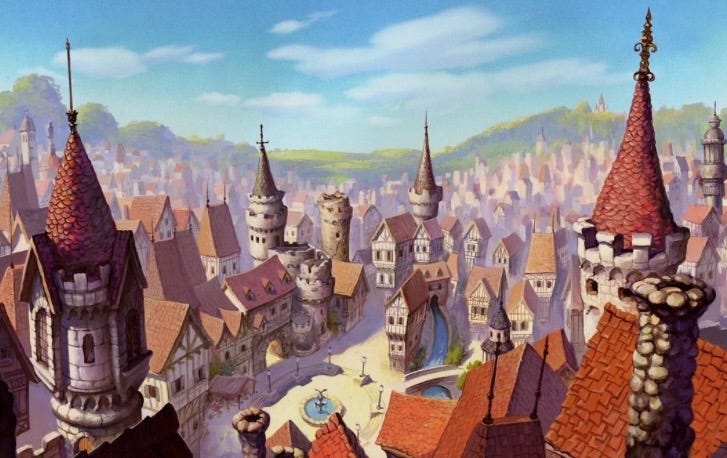
The gift of coming to The Eternal City as a teenager after an early childhood spent in “New Rome,” Washington DC, gave me many reasons to be inspired by the mystique of city-life. Both of these cities were bridges of understanding. Not only into our western heritage, but into the nature of neighborhoods and what they offered to its inhabitants. I was fascinated by the local nature of neighborhood cafes and liqueur stores, police departments and hotels, cemeteries and bookshops, within a larger metropolis. I was also impressed by the transition from countryside to urbanization. There was a close relationship, through not always a happy one, between the dirt roads of wide farms and crop fields, to the asphalted suburbia of townhouses and apartment blocks.
There was a special charm that I could see the Potomac River winding it’s way through the landscape from our home by George Town, or that I could see a pine-tree forest stretch from The Alban Hills right into downtown Rome. That the Ancient Rome of Romulus and Remus formed itself into a city between two groves didn’t reduce the urbanity of its foundation either. The urban nature of villages, towns and cities are not defined by the size of their area, but by the nature of their design.
When I would vacation to the country-side around Rome, it wasn’t the farms or the fields which defined the pastoral atmosphere, but the tiny village surrounded by some Arcadian forest. We didn’t live in the groves or under the pines, but admired them from afar while sitting on a chair, in front of a table. From every alley and at the end of every street we could see a glimpse of the classical landscape. It reminded me of where we were in the world, and enforced my understanding of what it meant to be in an urban context.
Whether we’re talking about a village, a town or a city, we’re never just talking about a place to be standing in the world, because the village, town or city must be a place in itself also. If this place within God’s creation has been removed from the urban landscape, because this village, town or city has denied its own heritage by destroying what it used to be, architects talk about a renunciation of the genius loci of that place, of renunciating the spirit of that place. This erasing of identity, which there have been many examples of since the industrial revolution, is not an urban quality, but a cultural crime, comparable to the erasing of history in other contexts and situations.
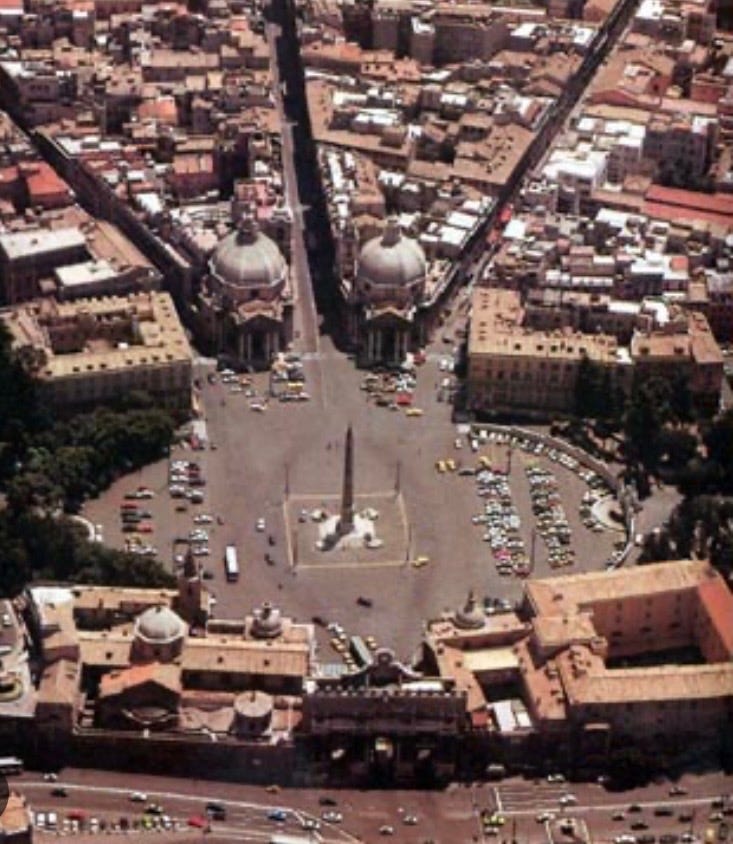
As I grew a little older in Rome, I would take the streetcar to Piazza del Popolo where I quickly developed some urbane habits by choosing my favorite coffee bar to read the newspaper. In those early days of the twenty-first century I always read the International Herald Tribune over a cup of iced coffee in the summer, and over a cup of hot chocolate in the winter. I could easily sit for hours on this piazza and I soon developed a love for the social liturgy of the city. If I ever came into conversation with another patron next to me, it constantly concerned the relationship of the city with the world.
Pax et Bonum,
Wilhelm Höjer