

In the twenty-first century over half of the world’s population lives in large urban cities. When Christopher Columbus crossed the Atlantic Ocean in 1492 A.D. only about five percent of the world’s population lived in what can be called urban cities or towns, while the rest lived in rural villages. That means that during the last five hundred years the urban density has increased by about one thousand percent. Industrialization, the expansion of the global economy and subsequent population increases saw dense urbanization skyrocket in the last one hundred years. The large urban population leaped from sixteen percent to fifty five percent between the year 1900 to 2000, a trend which was driven by a rising global migration from the country-side villages into those cities. Many have called it a frightening perspective.
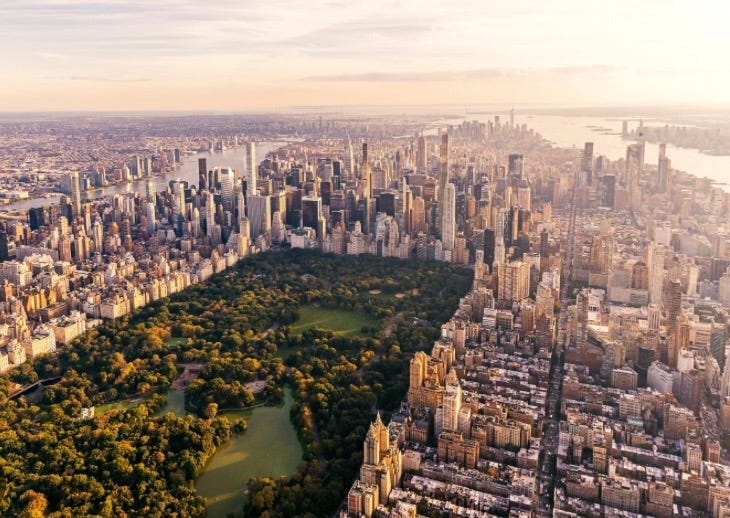
It’s a sociological calculation which signifies that for the twenty-first century, the number of urban residents in the world have doubled in percentage across the span of a few generations. There is reason to despair since neither any old fishing town in North America nor any medieval town in Tuscany is the measure for the development of the modern city. Globally speaking it’s an honest reflection to admit that the Industrialized City has become a symbol for the demise of civilization. Having consumed Newton’s apple a long time ago, we’ve fallen into the pits of poverty and unemployment, where street violence and littered garbage has become a part of our urban landscape from Naples, Italy, to Detroit, Michigan. We’ve witnessed an arrested evolution into brutality within the general development of our society.
The city does not stand aloof to this development, but stands athwart the crimes against her, yelling: stop! In line with her inhabitants, the city has been subject to technological advancements and economic politics which are ruled by Man and which rule Man. Through new road regulations we can ruin a city, but through them we can also cooperate in its salvation. The choice is ours. But should we obstruct the natural law of the city, it will come to revenge the wrong committed. The city, it’s true, is a product of Man, but Man is also a product of the city. We are informed by how we form a city.
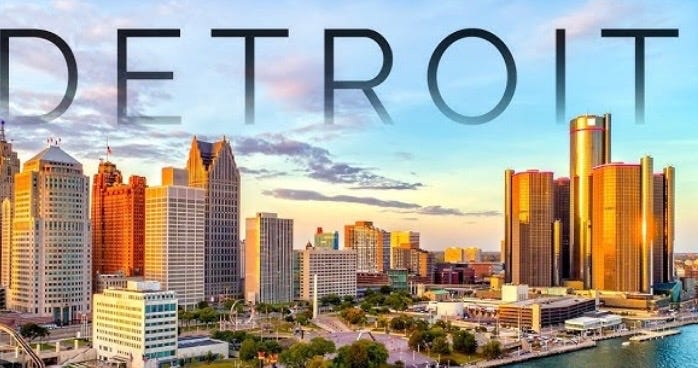
In the twentieth and twenty-first centuries a rampant globalization has brought the whole world inside the arms of certain societal structures which look the same in a Missouri farm town, a fisherman’s village on Sardinia, or a gas station along a Carretera Federal in Mexico. Neither in Detroit, Michigan, nor in Naples, Italy, do the inhabitants believe that the gates of architectural preservation and urban traditions can ever prevail against pollution, delinquency and other onslaughts from the outside world. But could they be mistaken?
The city was created with good intentions, many thousands of years ago. The Bible specifically says that the first city was built by Cain, the firstborn son of Adam and Eve, thousands of years before Christ. The city wants what’s best for us. The question lies in what we want for the city. Modern urban planning has had an awful tendency to undermine the culture of our towns. To study the birth of the industrial society to the growth of the welfare state, is in many ways to observe the divorce between urbanization and the urban way of life. Our old cities along the ancient waterways have been led by foreign inhabitants who have seen them more as money-hubs than as culture-hubs. The communication lines between the city and its suburbs have been prioritized over the city’s inner networks of communication. The cities have not grown from within, but rather given away their resources to new areas in the peripheries.
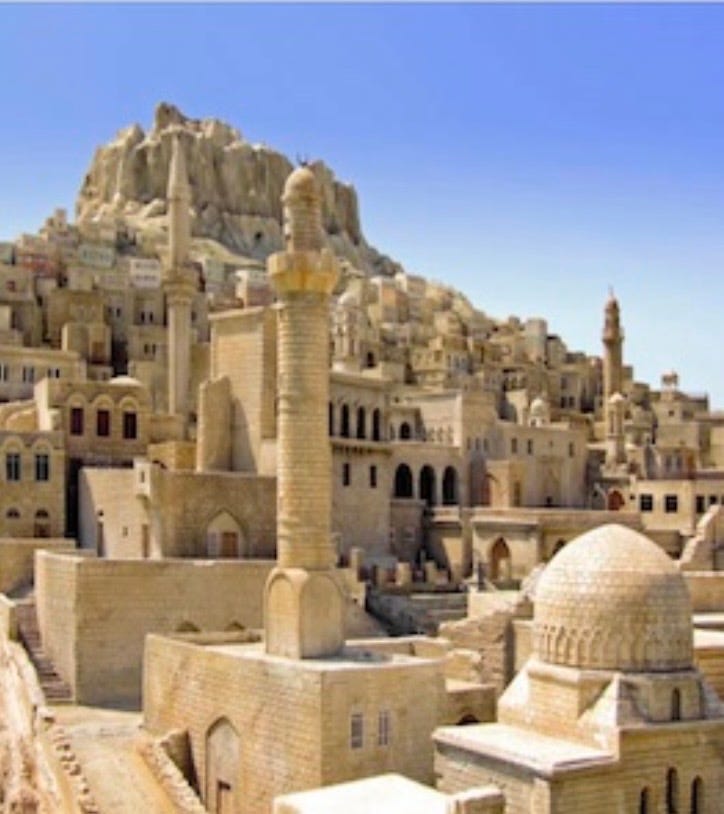
Our society’s new housing constructions and living spaces have seemed to ignore the social aspects of living in a city. The suburbs and the bedroom-communities have not become cities in themselves, but rather political projects which have reduced the urban lifestyle rather than cultivated it. Within the last two centuries there have arisen many agricultural romantics who on this basis have proclaimed that urban life is among the least natural forms of life, and they have been able to point to many urban examples which undermine human dignity. In these cases, however, they have not been talking about urban culture, but about the perverted urban concepts which they themselves have helped to promote.
One of western civilization’s most subtle thinkers, St. Thomas Aquinas, thought that human beings are by nature political animals, which is to say urban animals. As St. Thomas understood it, if Adam and Eve had never sinned before the fall, they still would have had cities. That’s a quite different stance from the rural romantics and from how we tend to think about politics today. We often think about politics in the context of the modern social contract theory, which sees cities as a remedy for the fall. In other words, we need cities because of our natural sinfulness or ignorance, or tendencies to violence and crime. But St. Thomas thought that even in the absence of those vices, we would still have needed cities for our virtues. We need cities not only to prevent wrong, but in order to provide the good.
With this in mind, the anti-urban posturing of contemporary politics hasn’t actually affected urban culture as classically understood. Instead, it’s been a reaction against modern concepts of urban development. Ever since the beginning of industrialization, misguided designs have been misconstrued for urban culture. In reality, urban developers were never given true consent and acted against the expressed will of the city. Urban development is not solely a question of how commercial and residential buildings are built architecturally, but also how the spaces between them are designed. Overlooking these “in-between spaces” has damaged the social environment of our cities, while also blocking our eyes from seeing that western urbanity is an expression of our humanism.
Our western civilization has developed around cities, not as a human organization, but as a living organism, with a natural play between these “in-between spaces,” between buildings and streets, and between city and countryside. The city doesn’t only belong to its citizens, because - to play with a quotation from the Book of Job - the city giveth as much as it taketh away. The city nurtures the land which nourishes it. It pays farmers for their fresh grown vegetables and it charges the farmers for opera tickets. The city has both a magnetic power and a productive power. It’s a public square, it’s an open market, it’s both a social and an economic organism, both a cultural and a political melting pot. Even the most developed industrial city still needs agricultural products to feed its inhabitants. Often it will also employ a free workforce from an industrialized agriculture, just as even the smallest village will think it wise to invest in public transportation and in high speed internet.
Pax et Bonum!
Wilhelm Höjer