

The end of the twentieth century and the beginning of the twenty-first century marked a time when the conflict between city and countryside, as between bourgeois and proletariat, became obsolete categories. It was, however, the beginning of new confrontations, other class distinctions, other social, ethical and religious wars. When the various green waves of the twentieth century wanted to see a new relationship develop between civilized man and his natural surroundings, they didn’t point to a new solution, but to an unnecessary conflict.
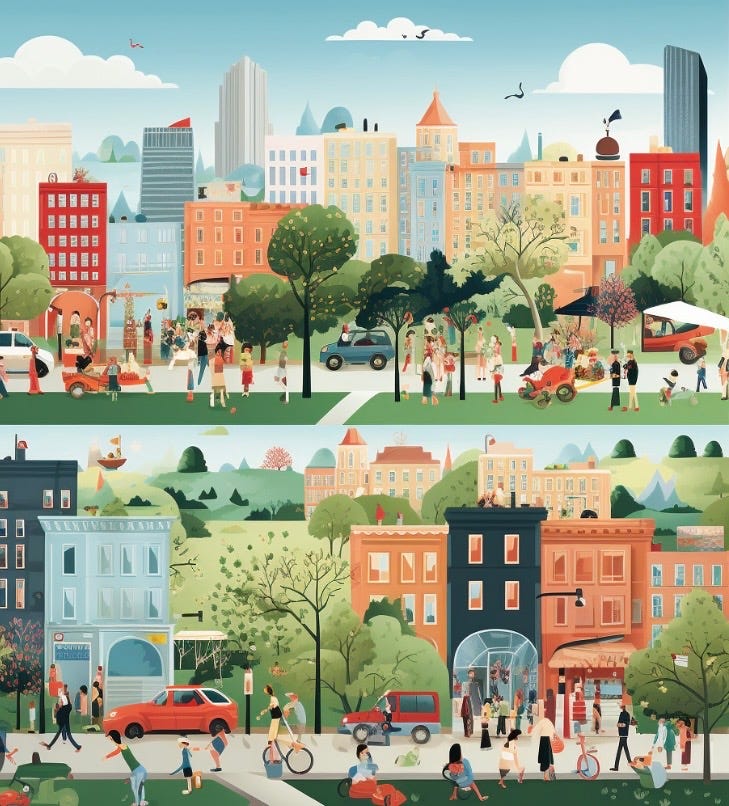
While these new environmentalists took to the streets of our cities, it was the urban centers themselves which developed our society both within and without the city limits, in particular in regards to our environmental impact on the planet. Our environmental consciousness wasn’t spearheaded in the countryside, but in our materialistic consumer societies. Likewise, it was the cities themselves who began to reclaim their past in refurbishing and restoring their buildings, as a necessary part of our urban environment. Furthermore, it was mostly the cities who had to find a way to integrate political and economic refugees, especially the new Muslim immigrants to Europe.
While the so-called green farming community began to spray our fruit and vegetables with various poisons, developed genetically modified products, and fed our fish and livestock with pharmaceuticals, it was the modern citizen who fought for biological agriculture, free trade, and alternative medicine. While the suburban peripheries have buildings which put our civilization to shame, it was the modern citizen who fought for aesthetically pleasing architecture. While our European suburbs sporadically are set aflame by immigrants and their xenophobic counterparts, the modern citizen is accustomed to buying spices and meats from Middle Eastern shops and exotic products from Asian markets.
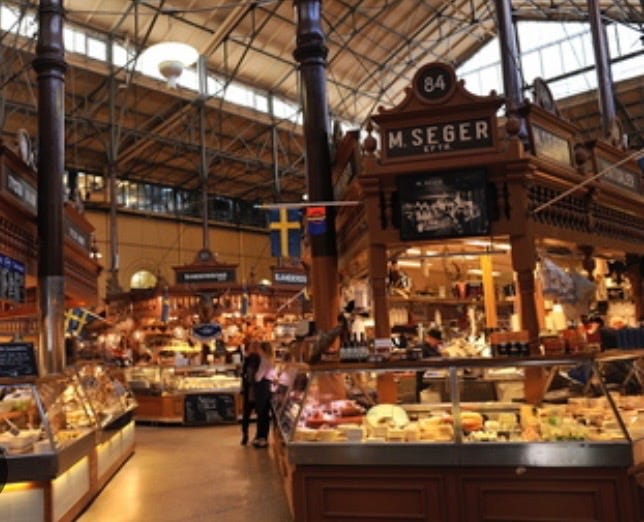
Choosing neither the Rousseauian myth of the noble soul of the wilderness, nor the Hobbesian myth of the savage soul of the city, is a good antidote to such unnecessary ideology. Perhaps it’s the city which ennobles the wilderness, as the soul ennobles and enables the body. If this is the case, then our natural resources are a part of our cultural inheritance. It becomes an educational necessity when too many children eat hamburgers and chicken nuggets, without ever having touched a cow or fed a chicken.
In the United States of America over eighty precent of the population live in urban areas. That’s not so obvious if we read the words of the patriotic song America the Beautiful which begins: “Oh, beautiful for spacious skies, For amber waves of grain, For purple mountain majesties, Above the fruited plain!” This is also the opinion of those who think America is successful because of its natural resources and not because it is filled with industrialized cities.
But it wasn’t the waves of grain nor the purple mountains which welcomed the American immigrants, it was places such as New York, Chicago and San Francisco. Cities in the middle of a glorious nature, close by the waterways, where people lived not only to enjoy the trees and coastlines, but who read the great books of western civilization, built mansions, drank red wine and dressed in the latest fashions.
Our cities are great historical resources for our Western heritage. They also represent a form of life which it’s still meaningful to recognize as natural for human beings. Above all, it’s a great educational practice, or a training ground, because the ability to live in a city, from a village to a metropolis, is in many ways a social art form. Not every one knows how to behave around a city. For the ancient Greek, who invented the city-state, a barbarian was a noun which described a man who wasn’t blessed enough to live in a self-governing polis.
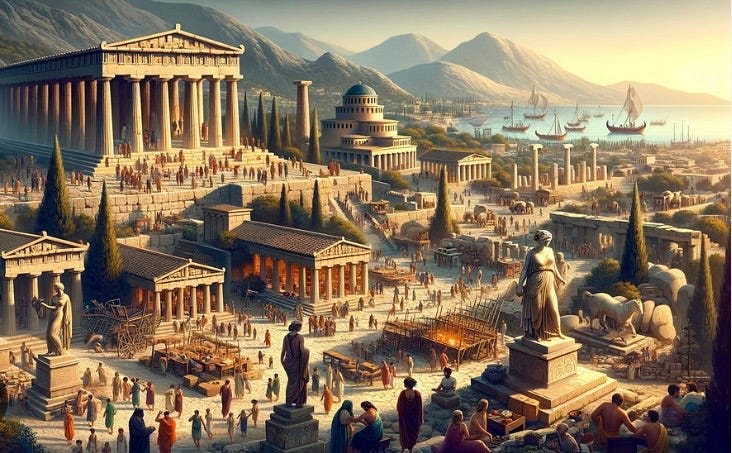
In their mythology the ancient muses of Greece had a great gift to give mankind, more important than the gift of poetry, which was the gift of public life in a polis, in a word: politics. Politics was understood as being able to see straight and to deliver a straight judgement within beautiful and persuasive language. It was, in other words, both an intellectual and an aesthetic concept. In ancient Greek, the good and the beautiful had the very same adjective, Kalos, making the right decision also the straight decision. In English this idea is translated into our conceptions of moral rightness and rectitude. Architecturally this idea could be compared to how a master craftsman built the cornerstones of the famous temple of Athena in Athens, which was the focal point of their polis surrounded by the natural landscape of Attica.
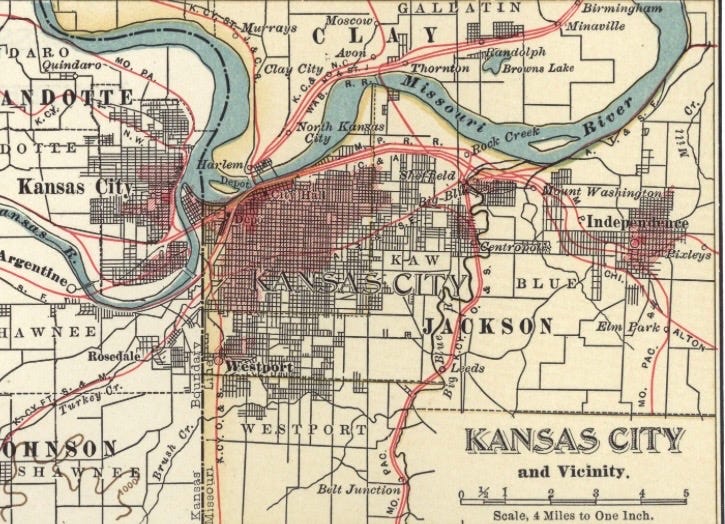
Currently this Substack and these particular words about villages, towns and cities are being written on the last day of November in Kansas City, Missouri, with a distant view towards the government district of downtown. Illuminated skyscrapers, the neon red Western-Auto sign, brightly lit modern loft-apartments and an airplane overhead completes the panoramic view. At the same time, close at hand, the grand tree canopy stretches out across Kessler park, the red northern cardinals are flying between its branches and even a few deer are peeking out between the cottonwoods. Sitting on top of a natural bluff which overlooks the hills of Kansas City and the banks of the Missouri River is a good reminder of the relationship between cities and their natural landscapes.
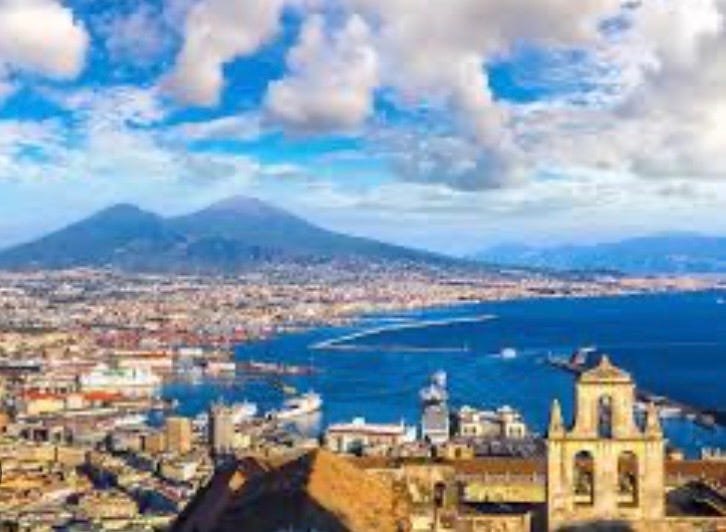
The natural identity of a given area is a huge part of any urban environment. What else can we conclude from the Volcano Vesuvius which rises above Naples, the winding canals of Venice, the archipelago islands of Key West, or the mysterious fog which lies over London? San Francisco lies in a protected bay along the Pacific coast of America, Madrid lies on the undulating plateau of sand and clay known as the Meseta. This natural topography helps to define them as cities. In many cases a natural phenomenon is a city’s premier characteristic.
Pax et Bonum!
Wilhelm Höjer