

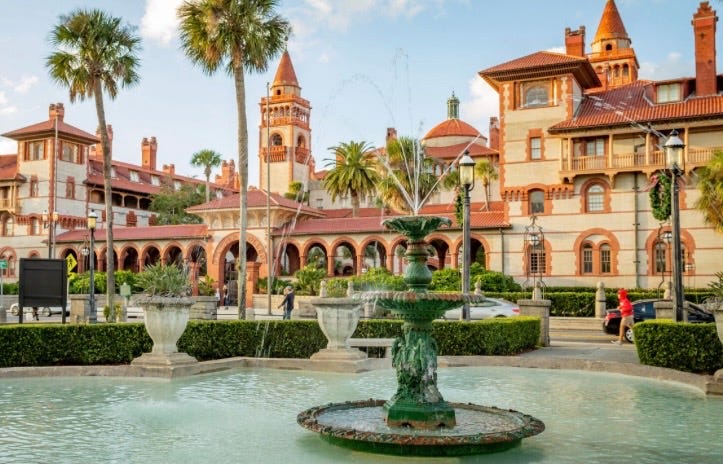
When we arrive to a new village, a new town or to a new city for the first time, we’re not immediately grappling with the intricacies of this village, a particular town or that city. The first thing that meets us as we enter Fernandina or St. Augustine, Madrid or London, is the urban life itself. With its unique network of streets and squares, public buildings and private homes, working-places and entertainment-places, it’s not so much Fernandina or Madrid we’re seeing but the urban reality as such.
We likely have a travel-bag across our shoulder, a street name on our smartphone or a hand scribbled address in our pocket. We know what destination we’re walking towards, yet we don’t know where we’re standing. We’re not yet asking ourselves which way to turn from the railway station or the parking lot, we’re wondering what we should do with our firsts steps in this new town. We look at the sun and ask ourselves which way is East and West, North and South, in what direction the streets will take us, and if our address is near or far. We’re standing in a traffic hub, between cars and pedestrians, roads and sidewalks, which radiate outward into the city. Whichever way we point our feet they’re pointing towards a foreign land, but it’s a land in which we’re not a stranger. We ask ourselves where the squares with the best coffee shops are located, on what alleyway we’ll find the best bars and what the local menus have to offer. Our eyes search the streets for famous monuments, graveyards and impressive buildings, wondering where the generations divide up the city, where the businessmen talk numbers and the students talk ideology. We don’t know anything about all this, of course, because we’ve never been here before, but we know what we should look for, because we know that we’re in a city. If we’re already familiar with a few towns or cities, and are therefore familiar with urban life, we can quickly diagnose its most vital parts. However it can take a few hours to discover the natural laws beneath its apparent jumbling of the old with the new, wealth with poverty, the local with the universal. Admittedly, it can take several years for us to become intimately familiar with a particular city.
David Levy Yulee was the nineteenth century visionary who founded the modern Town of Fernandina on Amelia Island, where my family settled for a while. Yet, the bedroom community off the island that actually bears his name is not much to write home about. Then it’s much easier to see why so many books have been written about St.Augustine. It’s not because wealthier people live there, which is certainly not our first impression when driving there, but we quickly notice that St. Augustine has a history which is about four hundred years older than the bedroom community of Yulee. And we soon notice the Catholic Cathedral in St.Augustine within the old port-city walls, which reminds us that this town was formed in the Age of Sail around the Bishop of Spanish Florida. St.Augustine was already the most cosmopolitan city in North America long before Yulee became a county division of Jacksonville.
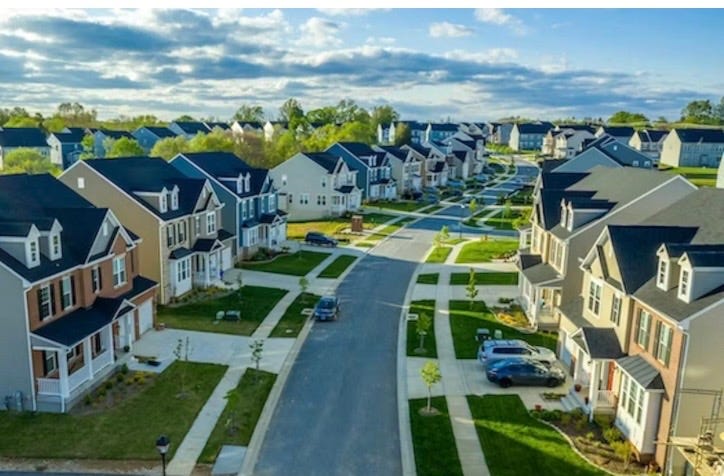
We may quickly think of Havana, which is another port-city founded upon the Spanish imperial and ecclesiastical tradition. We never think about Yulee, but as is the case with Yulee, both St.Augustine and Havana have their suburban communities, we simply don’t notice them as much, because in contrast to Yulee, these capital ports didn’t receive their urban identity as suburbs. Nonetheless there is a highly urban lifestyle which we become aware of when we’re fumbling after a street address in The Oaks or the Wildlight residential communities in Yulee. We don’t need to have read anything about the modern origin of bedroom communities, because we can drive through its streets and read this history on every building.
As we’re driving through Florida, it’s clear that the first great European power in North and South America was Spain, but, as is evident in the great nation of Brazil, also Portugal. The first time I visited Portugal, I visited Lisbon, where I took a bus ride with my wife around the city. The tourist bus drove us up to the area around Castelo São Jorge from where we could see a wonderful panorama over the tightly built neighborhoods of the legendary city by the river Rio Tejo. After a few hours of looking around us we quickly realized that it had been an unnecessary bus ride. There are a number of streetcars which takes one up the seven hills of Lisbon. Then it’s best to walk slowly down the São Jorge hill, at dusk, to absorb the atmosphere from the many local eateries which have been run by families throughout many generations.
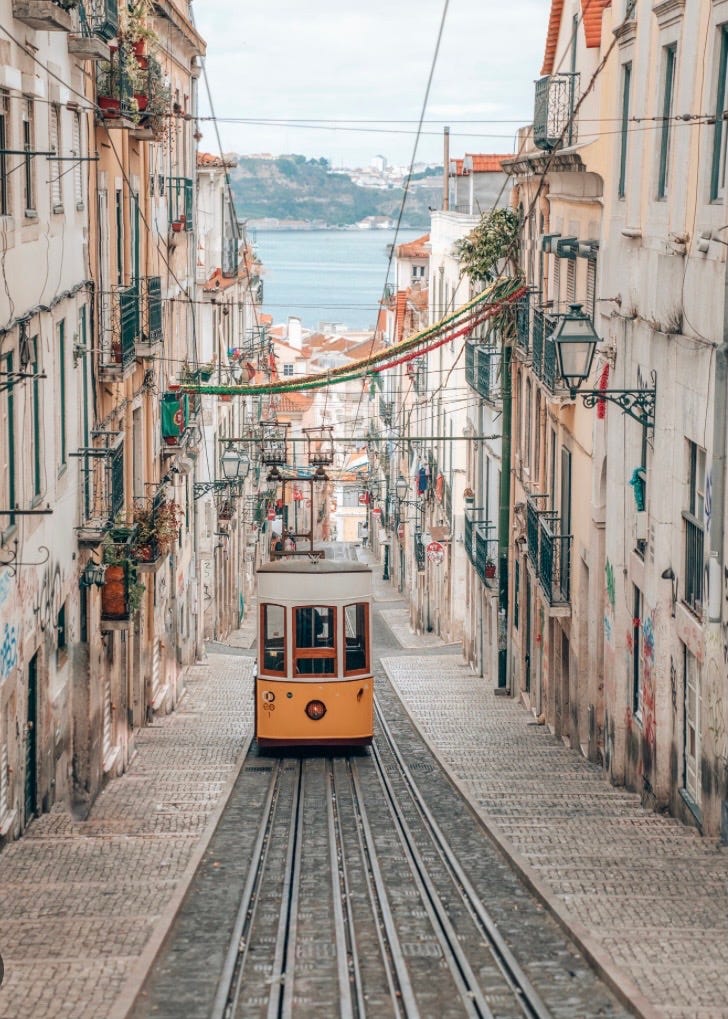
Lisbon is not a city built for a bus tour, it’s almost not suitable for a guided tour on foot either. It’s a city where we should preferably climb up and crawl down, taking the most improvised excursions down various side streets without a map or directions. This was how it was built. It was built throughout a dramatic history where it has needed to defend itself as a port-town on the Atlantic Ocean against enemies and invasion, in particular a successful Crusade against the African Moors. It has also spread itself over the world through adventurous men, as in Vasco de Gama, who sailed out from its river towards unknown shores to plant the royal banner.
Its destiny has involved a series of climbs and pitfalls in its political and economic path, practically resembling its own geography. After the famous Lisbon earthquake of 1755, the city was rebuilt according to the principles of modern urban design, on an open rectangular plan with two great squares, the Praça do Rossio and the Praça do Comércio. It was invaded and sacked by Napoleon, forcing the king to rebuilt it again. In 2007, the Treaty of Lisbon, which forms the constitutional basis for the European Union, was signed here. In 2018, the Aga Khan chose Lisbon as the official seat of his Muslim Imamate. It’s Europe’s westernmost capital, peering into the ocean, out on the edge of the continent, where the buildings speak to tell this story themselves.
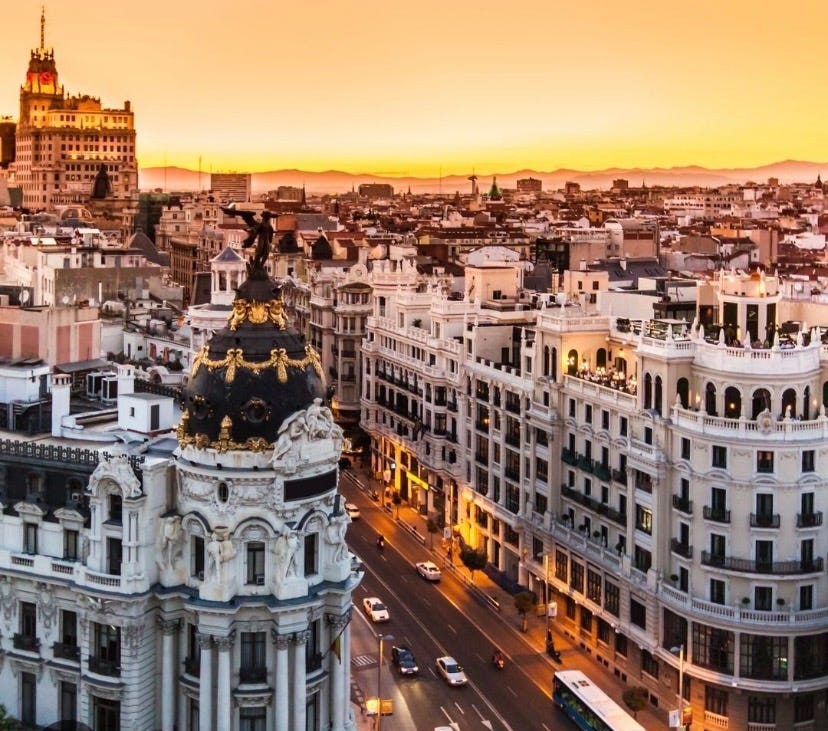
When one comes to Madrid, we quickly realize that it’s a dense cosmopolitan city, being a large, intricate world capital, and the center of a unified Spain since King Philip II, who also created a unified empire stretching from the Atlantic to the Pacific Ocean. We see that it was built using contrasting styles of architecture and different layers of history overlapping in the same space. However, we soon realize that it’s not too difficult and intricate of an undertaking to become familiar with its urban plan. It naturally requires more time to understand Madrid than St.Augustine or Yulee, but it doesn’t require more effort.
Small towns are often weighed down by being too big in their urban design, while large urban cities often have the advantage of being divided into a series of small towns. After a few days in Madrid it’s possible to familiarize ourselves with all the central neighborhoods which are necessary for our needs. We can quickly find our favorite tapas bar behind the central square and pretend that we’ve always lived behind the Plaza Mayor, but that we tend to enjoy an authentic Paella Valenciana behind the Gran Via as we contemplate Ernest Hemingway’s time in Madrid and his passion for bullfighting and sensuous delights. Whenever we should return to this city, we will not know where we are until we retrace our footsteps in these neighborhoods in order to come back to Madrid again.
Urban areas make up only 3 percent of the entire land area of The United States of America, but are home to more than 80 percent of the population. In other words, 97 percent of the country’s land mass is rural but only 20 percent of the population lives there. These statistics don’t include traditional rivalries, such as between the staunch Protestants in the Holy City of Charleston in South Carolina, or the staunch Catholics in the Ancient City of St. Augustine in Florida, and they don’t point to any of their other urban differences either.
Regarding their similarities such statistics point to the fact that a city is always a city within the parameters of demography. They point to the fact that every city can be defined as a city without any reference to other cities, that it concerns measurable conditions of population density and economic stability, and that all cities are designed according to some easily recognizable criteria. They also point to a contrast with industrial areas and suburban neighborhoods which aren’t to be called cities at all. Regarding these statistics, we might be tempted to ask why are there no towns surrounding some train stations along the Florida train lines, while “New Town” Fernandina was allowed to become a wealthy train-station town under David Levy Yulee?
There are politically important cities, called municipalities, which stop being cities well before the edges of their administrative boundaries. If one lives off of Amelia Island, on the mainland along the highway A1A, one pays taxes to the City of Fernandina, which is where one’s postal address is also, but it’s a matter of simple definition as to whether one lives in the city or not.