

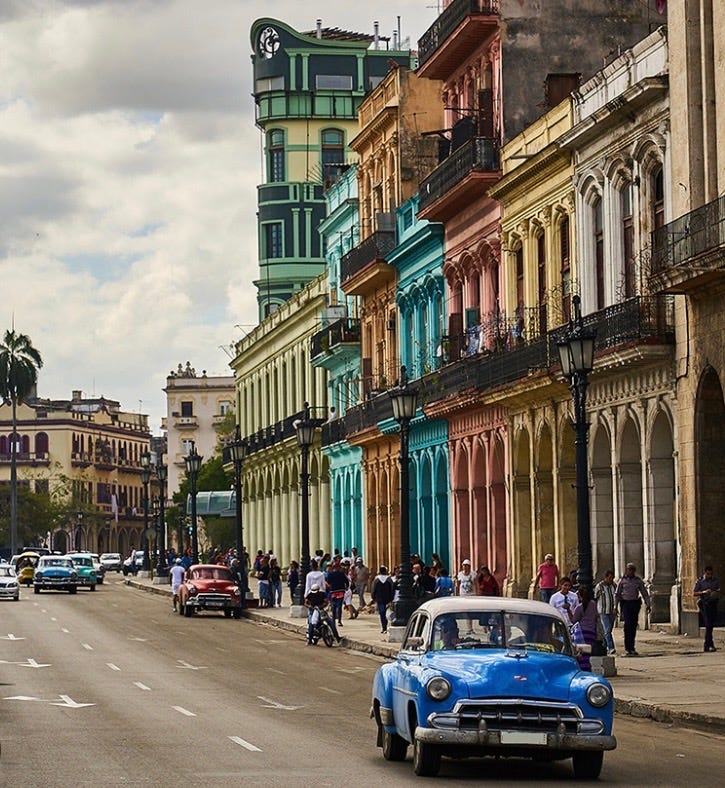
We always know how to recognize a city as a city when we come to one, but do we really know much about what a city truly is? How can we explain that a train junction such as Baldwin in Duval County, Florida, is by definition as much of a town as Havana, Cuba, is a city, while a bedroom community such as Yulee, Florida, is both a bedroom community to the city of Jacksonville and the administrative headquarters for Nassau County without ever being a city or a town, not even a village?
In particular, in comparison with less important commercial and political urban areas of the world, Yulee, Florida, is more of a traffic junction, filled with county offices and restaurants, furniture stores and highways. Yulee has a population which is well above the international minimum to qualify as a city, with over twenty eight thousand inhabitants. In the grand expanse of the United States of America the minimum population for a town is usually placed far below this number. Then why are we so convinced that Yulee is not a village, a town, or a city, but a bedroom community?
We know that every village, town and city is something more than the opposition it might receive from trespassing boundaries and encroaching upon the surrounding countryside. We also know that every village, town or city owns a personality that distinguishes it from any other village, town or city. According to classical thought about buildings and architecture, structures are as unique as people, being formed in their image. The fact that we are not merely animals, but social and political animals, makes us a part of the human race, but not necessarily a Floridian, nor does it define who we are as individuals. What makes both Fernandina and Havana into cities, are obviously some common features of urban design and identity. But it’s the differences between them, when we point to their unique characteristics, which has made them into Buenos Aires or Havana, London or New York, Paris or New Orleans.
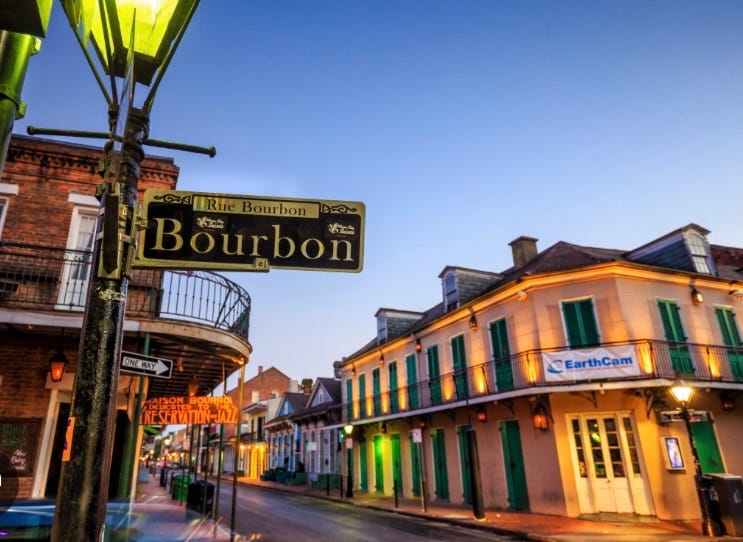
In order to understand the history of urban development in general, it’s also necessary to be able to read the storyline of each individual city. The history of urbanization is composed of both parts, of the urban phenomenon of villages, towns and cities in general and of this or that village, town or city in particular. We can appreciate the urban phenomenon as a cultural product of mankind’s social nature all around the world, and all around Europe and America, while also seeing it played out in the particular urban area where we live. All villages, towns and cities are able to speak with one another in their mother tongue, which is a universal urban language, yet they never speak with exactly the same voice, even if they’re telling us the same story. Charleston, South Carolina, might be comparable to a chronicle, St.Augustine, Florida, to an emotional drama. While Madrid might be comparable to a multivolume encyclopedia, Lisbon to an epic poem.

More than anything else the city has been a sign of mankind’s social intelligence for thousands of years, as a cultural expression of a natural God-given necessity. In the urban alphabet, which hasn’t really changed since the universalization of the urban tongue under the Roman Empire, western civilization can communicate across time and space, from places as diverse as Jerusalem is to Washington DC. Yet we still experience the differences very clearly, though often subliminally, when we compare them.
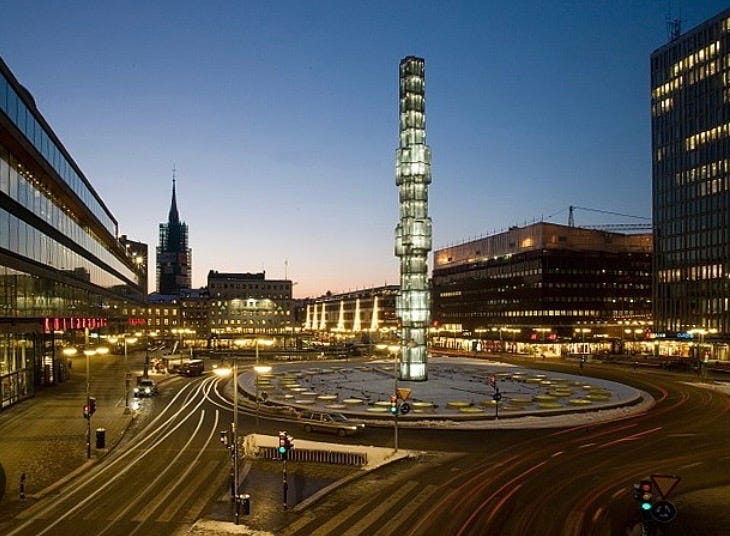
Europe is as divided between Catholicism and Protestantism as it is between the social intelligence of its urban design. Whoever has once fallen in love with Bernini’s elliptical design of Piazza Navona in Rome with its obelisk crowned fountain, is often blind to the fact that the same vocabulary is being used in Piet Hein’s superellipse inspired design of Sergels Torg in Stockholm, with its own obelisk crowned fountain. After this relationship has been pointed out to us, the immediate similarities are as obvious as the differences are stark.
Pax et Bonum!
Wilhelm Höjer