

Once a month this year, a letter from wherever the road has reached. Part of an ongoing exchange between myself and Zachary Stoltzfus of Further Afield.
Letter III
I write this from Cihangir, on a hill in Istanbul, where the streets fall toward the water and the cats are as numerous as the people. You are building fires against a winter; I have the windows open to the Bosporus. Between your last letter and this one we have been through Rome, and down the Tyrrhenian coast, and across to Turkey, and I am not the same man who wrote to you from Ireland, though I could not tell you exactly what has changed.
When I wrote last, we were moving toward something. There was a school we meant to see near Turin, a life in the north of Italy we were beginning to imagine for the children. We went to see it. And then, somewhere along the coast, the imagining stopped. I cannot account for it entirely. It was not that Italy failed us. It was that, having come all this way to look for a new place, I found myself remembering a certain light on a coast we already know, and the strange possibility that the road we are on might curve back rather than forward.
You quoted the poet who says he moves to keep things whole. I have found myself carrying that line through these weeks. Then, on a road trip from Istanbul along the west coast of Turkey, we climbed the hill above Ephesus to the ruins of the basilica they raised over the grave of St. John. That’s the same John who wrote his Gospel in that place, the one that begins before all beginnings.
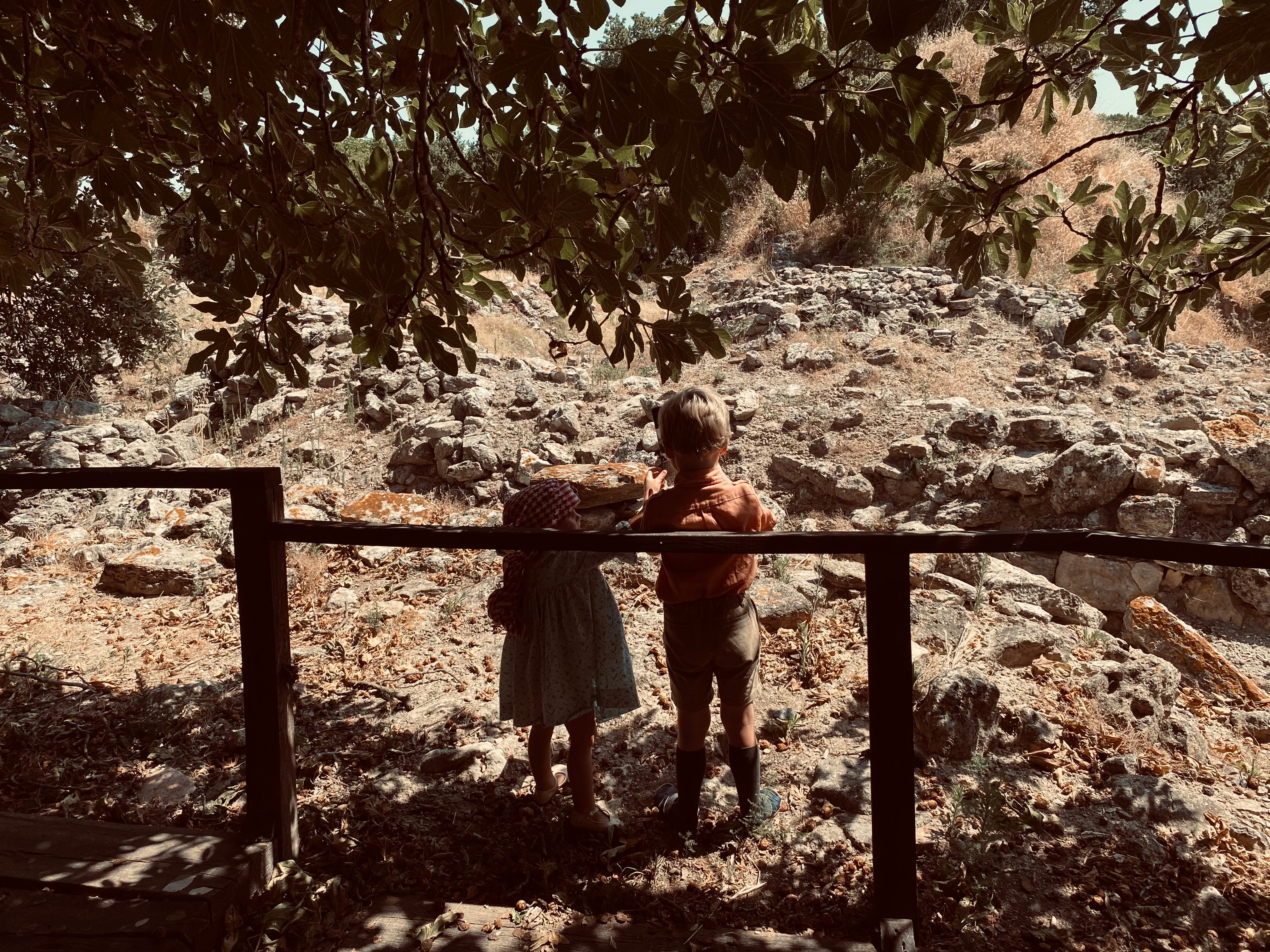
The children climbed with us. They ran the broken steps, balanced along the low walls, ducked under fallen arches, called to each other across the stones. They did not know they were on the grave of the man who wrote In the beginning was the Word, and it would not have slowed them if they had. And yet they were not lost among those ruins. It was a holy and commonplace play. They were entirely at home there, conversing with the stones and with the long afternoon as naturally as they would with the furniture of their own house.
I stood and watched them and thought: this is the thing I have been trying to understand for two letters now. A great city stood here and emptied. The sea withdrew, the people left, the harbor became a field. And still a child can climb these stones and be at home on them, because what the stones carry has not emptied with the city.
You wrote that seeing past the bad to the good is part of the task, and that this seeing is somehow in these letters. And I think I saw it there, on John’s hill, watching them play.
We keep asking where we should go, as though wholeness were a place we have not yet reached. But the children were whole on that ruined hill, two continents and two thousand years from wherever they will grow up, because they carried their home with them into the ruins. Perhaps that is the new way of staying put: not to find the right place at last, but to be so grounded in what one already is that any place becomes a place one can be at home in.
Outside, the ferries are crossing to the Asian side and back, as they have for longer than anyone can remember. Soon we go on. Soon the road turns toward America and the house, and the boxes I have still not begun to fill.
For now, it is enough to know that the road does not always lead onward.
Next: your move, and then mine.