

The first archeological city we can visit outside of Rome, is a place called Ostia Antica. It was first excavated in the early twentieth century. After a series of invasions at the end of the Roman Empire, it was eventually abandoned as a settlement sometime in the ninth century. But thanks to modern archeology, it’s still very easy to visit this favorite country retreat for the ancient Romans
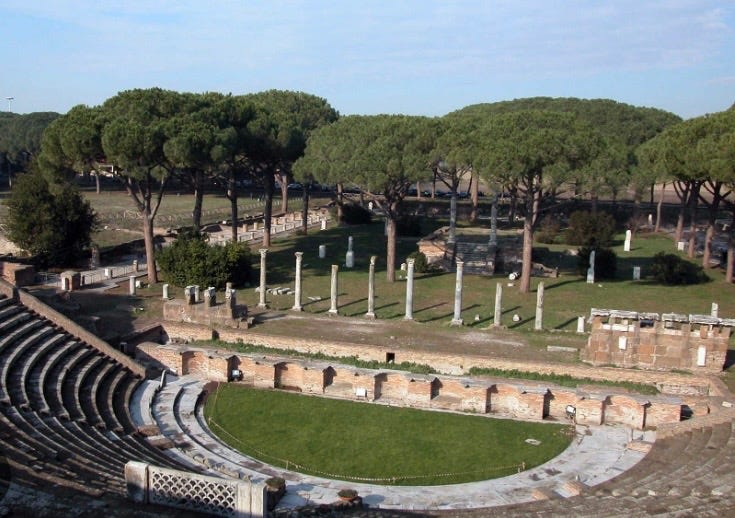
After entering the gate we’re quickly walking over deep carriage grooves in the streets, past taverns and bakeries, with their painted menus still visible, past homes and temples, all in the footsteps of our dead ancestors. It also contains the oldest synagogue in Europe from the first century and an ancient Catholic chapel. Since the advent of archeology as a systematic science in the nineteenth century, a period of rediscovery was introduced in The West. It initiated a new dialogue with our past, both within architecture and between historical documents, but it also helped to lay the foundations for gastronomy and sociology. In other words, one can stroll around the streets of Ostia Antica and begin to see how a Roman city was organized, both socially and in their urban planning.
Yet the experience is also rather eerie, as if one is viewing a body within an open grave. The Mediterranean peoples have always had a very natural relationship with their past, where newer buildings have woven themselves effortlessly into ancient ruins, forming themselves into an organic whole. In contrast, modern archeology, for all its merits, has also resulted in a very inorganic severing of our history into separate academic categories.
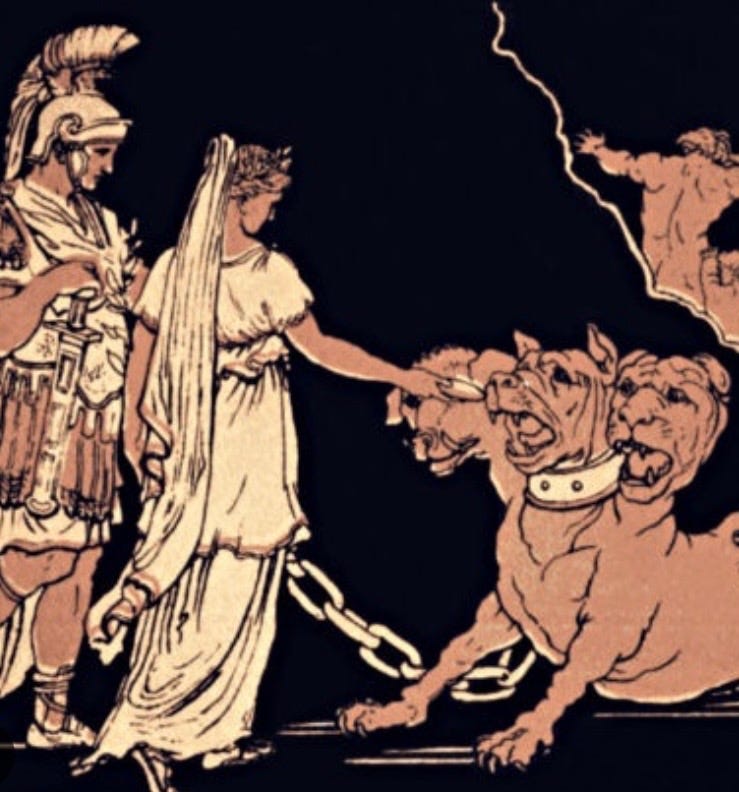
Virgil’s Aeneas was led into the underworld by the Sibyl of Cumae, but with great sadness he spots souls who were refused passage into the underworld by the unfulfilled duties of the living. The Sybil explains that in order to be delivered into the afterlife all corpse’s have the right to a proper funeral. This ancient reminder quickly leads the curious tourist to ask himself how he was ever allowed to enter down into this forbidden underworld. A dead city is aptly named a ghost-town because it describes an empty shell of a city, whose soul has left its body. An undelivered ghost can be a frightening apparition.
However, the heart of the matter doesn’t rest in whether a city has risen or if it has fallen, or even if it’s been restored, but if it’s experienced as a living and breathing city.
At its most powerful period, the imperial city of Rome had a population of over one million people. But after the barbaric invasions, beginning in 410 with Alaric and his Visigoths, it devolved into a village of a few thousand inhabitants. Though it’s recognized as the oldest continuous city on the Italian peninsula, it’s not the ancient city of Romulus which has survived, but the medieval, renaissance and baroque city of Papal Rome which revived and vivified the urban life on the seven hills.
No-one lives upon the Palatine Hill or in the Roman Forum anymore, but their ruins have been excavated within the living capital of modern Italy. We may ask ourselves what remains after something has disappeared from the earth? Whatever else may or may not remain, it’s undeniably true that the emptiness remains - either the emptiness of communal forgetfulness or the emptiness of a soulless frame, in other words, a ruin.
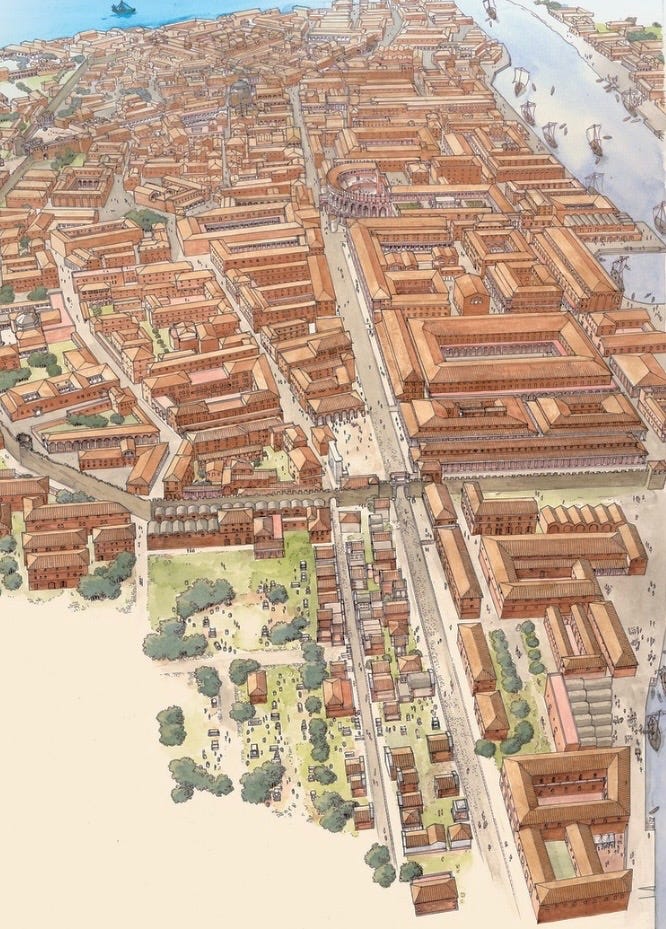
Ostia Antica inspires its visitors to revisit the ancient libraries, to wonder in who’s footsteps one is walking, to pose historical, political, even environmental questions, and to ask if a museum can turn itself inside out, whether the spectator is, in fact, the true artifact.
It was once an affluent town, beloved by the Romans, situated along the Tyrrhenian coastline, bustling with goods, immigrants and urban energy. It’s easy to get an impression of what authentic Roman urbanism looked like as one walks between the impressive atriums of a Domus and the apartment-blocks of the popular Insulae. These two kinds of housing were intermingled in the city and not segregated into separate neighborhoods. The ground levels of the Insulae were used for Tabernae, which could be various shops and businesses, with the living spaces placed above them. They usually had a name attached to them as well, which was often the owner of the building. They were organized in square-shaped areas forming private blocks, which are easy to differentiate from the more public spaces of the town, which were composed of large steps leading up to temples and theaters, bathhouses and markets.
The ancient philosophers, who lived in similar towns, viewed man as a microcosm of the well-ordered cosmos, which was a word first used to describe a well-governed city, from where it was transferred to include the whole universe. With this in mind it’s especially informative to notice that their living quarters were designed to be cities in miniature. Every home, rich or poor, had an atrium which was the city gate of that home. It had a so-called peristyle, a colonnaded central garden, which was the central market square of that home; while the various rooms surrounding it were organized to be the private houses of that little town, which was the home.
Ostia Antica doesn’t remind the visitor of national open air museums such as the famous culture-park Skansen in Stockholm, because nothing has been moved here, or collected here from other parts of the country. Archeological digs have simply removed the dirt which hid this town. One can argue that Ostia Antica is just as alive as the Spanish quarter of St.Augustine can be said to be a living museum. No one lives among these ancient streets anymore, but a restaurant could easily be open for lunch around the next corner, which is actually the case in the dead city of Pompeii, where you can eat an Insalata Caprese under the shadow of Vesuvius.
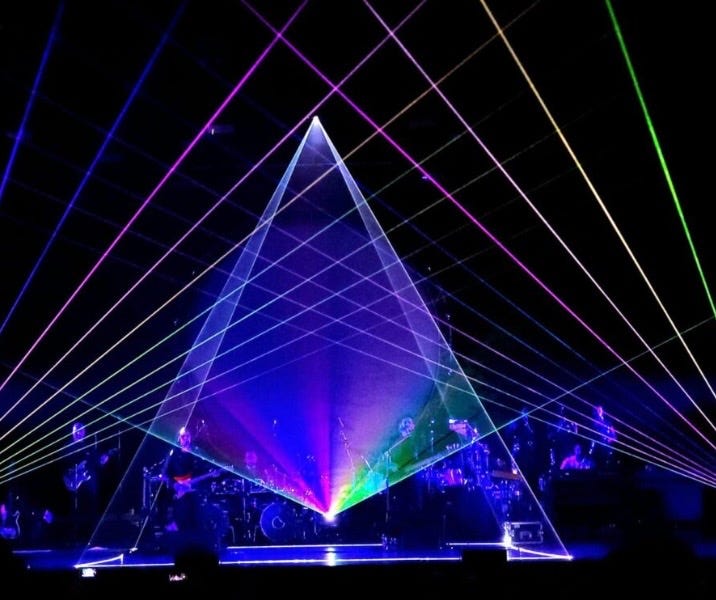
Many industrious - and industrial - visitors have even suggested that they could restore one of the ancient villa’s into a fashionable modern residence. It’s also worth remembering that the rock group Pink Floyd had a memorable concert in the Roman amphitheater of Ostia Antica, which continues to resonate in the organization of many other concerts.
So in what existential state does this ancient town now find itself? It’s not going to be an easy answer, except to admit that it lied buried and hidden for centuries and now lies uncovered for the world to see. The feeling is not far from voyeuristic, with the ancient Sybil’s dire warning to Aeneas still echoing in our memory.
Though mankind might attempt to resurrect her, the question will be if it’s wise to do so, since God is God and we are not. It might become an architectural Lazarus built in our own image, which will resemble Frankenstein far more than Adam; or The Venetian Resort in Las Vegas rather than the Gran Canale in Venezia. Whatever her fate will be, archeological towns will remain an important chapter in the story of our western urban heritage.